

Our Veterinary Blog
Cat Sleeping Positions: Where Your Cat Sleeps and What It Means
Last night, your cat curled into a tight little ball at your feet, tail tucked and nose hidden, while the night before they stretched across the back of the couch like they owned the place. Those small shifts catch your attention because they feel personal, and they are. Cat sleeping positions and the places cats choose to rest tell a quiet story about comfort, temperature, instinct, and trust. As your cat’s veterinarian, we see how these patterns connect to physical comfort and emotional security. When pet owners search for the meaning behind their cat’s sleeping positions, they want reassurance that these habits are normal and insight into what their cat may be communicating. Sleep posture and location work together as a form of body language. Once you understand those clues, you gain a deeper look into your cat’s daily experience at home.
Why Cats Sleep Near You
Cats choose sleeping spots with intention, and when your cat settles beside you, that choice carries meaning. Your body gives off steady warmth, a consistent heartbeat rhythm, and familiar scents that create a sense of safety. In the wild, felines rest near trusted members of their group to reduce vulnerability during sleep. Your home becomes that social group, and you become part of your cat’s safety network. This explains why many indoor cats sleep at their owner’s feet, on the chest, or tucked along the hip. These spots allow quick escape if needed, while still maintaining close contact.
Sleeping near you also reflects routine. Cats thrive on predictability, and your bedtime signals a calm, low-activity period. That quiet environment encourages deeper rest cycles, which matter for muscle recovery, memory processing, and immune health. When people ask about the meaning behind cat sleeping positions, proximity to you often indicates emotional comfort rather than dependency. It shows your cat associates you with security and stability.
You may notice these patterns when your cat sleeps near you:
- Choosing the same spot on the bed each night
- Adjusting position if you move but staying close
- Facing toward the room entrance while still touching you
Those details highlight how cats balance affection with instinctual alertness.
Common Sleeping Spots Explained
Cats rotate sleeping areas based on temperature, elevation, and environmental awareness. Each location supports a different need at a particular moment. Understanding these preferences helps you interpret everyday behavior through the lens of feline instincts rather than human assumptions. When owners explore cat sleeping positions meaning, location often answers half the question before posture even comes into play.
High Perches
Elevated areas like cat trees, shelves, or the back of the sofa give your cat a vantage point. Height provides a sense of control over the environment and reduces surprise from behind. From these spots, cats monitor household activity while conserving energy. A cat that favors high sleeping locations often feels confident but still alert. These perches also stay warmer because heat rises, which adds physical comfort.
Enclosed Spaces
Boxes, laundry baskets, and covered beds attract cats who want contained security. Tight spaces reduce exposure and mimic sheltered resting spots in nature. Cats use these locations when they want to feel hidden, warm, and protected from sudden disturbances. This preference becomes more common during loud events like storms or gatherings. It does not necessarily indicate fear, only a desire for controlled surroundings.
Sunny Windows
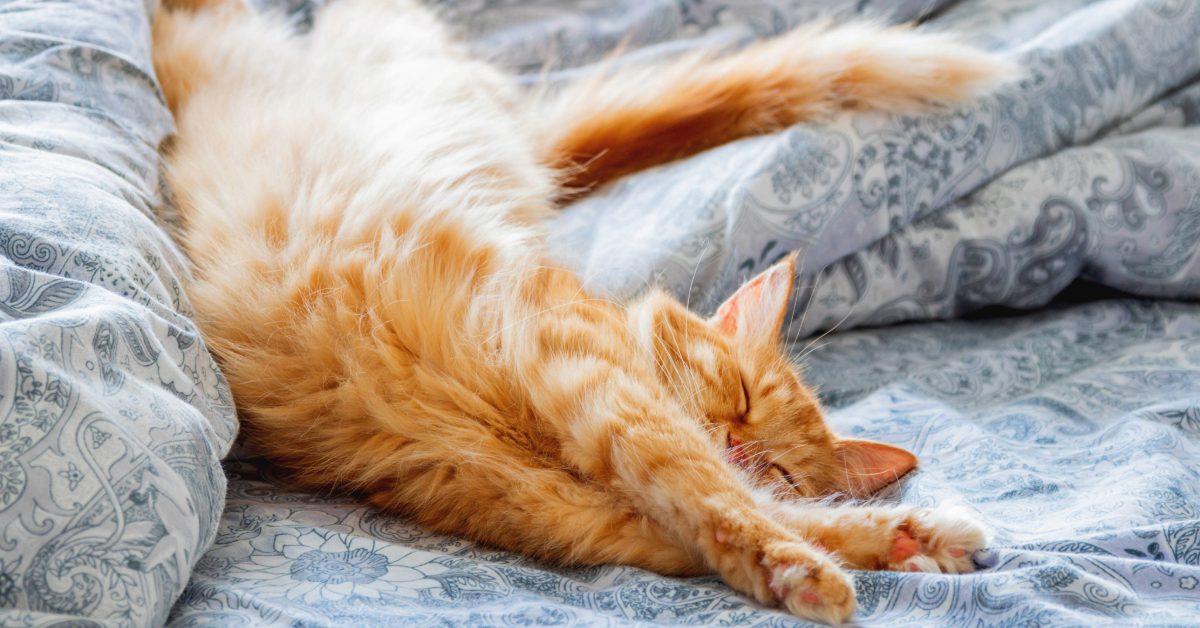
Sunlit patches serve as natural heating pads. Cats seek warmth to relax muscles and support digestion. A cat stretched in a beam of sunlight usually feels safe enough to sleep deeply. That loose, open posture often pairs with full-body extension, which contrasts with tight, guarded positions used in cooler or less secure settings.
What Their Sleep Position Says About Trust
Body posture reveals how safe your cat feels in that moment. The more exposed the belly and limbs, the higher the comfort level. When interpreting the meaning of cat sleeping positions, veterinarians look at muscle tension, limb placement, and breathing rhythm. These details paint a picture of relaxation versus vigilance.
Common sleep positions and what they suggest:
Curled ball: Conserves heat and protects vital organs; common in cooler rooms
- Loaf position: Paws tucked under body; light rest while staying ready to move
- Side stretch: Muscles relaxed, deep sleep likely, environment feels safe
- Belly up: Maximum vulnerability; strong sign of trust and comfort
These postures shift throughout the day because cats cycle between lighter naps and deeper sleep phases. A position that looks dramatic one hour may change quickly with environmental noise. Observing patterns over time gives more insight than a single snapshot.
The Loaf
The loaf position looks neat and compact, with paws hidden under the chest. Cats use this posture during light rest or while staying socially present. It signals comfort combined with readiness, which suits daytime naps in active households.
The Belly-Up Position
When a cat sleeps belly up, abdominal organs remain exposed, which wild felines avoid in risky settings. Domestic cats use this posture when they feel secure in their territory. It does not always invite belly rubs, though. The position communicates trust in the environment, not necessarily a request for touch. Sudden movement can still trigger reflexive defense.
When to Be Concerned
Most sleeping changes reflect normal adjustment to environment or temperature. However, consistent shifts in posture or location can signal discomfort. Cats hide pain well, so subtle differences in sleep habits may provide early clues. Owners searching what do cat sleeping positions mean sometimes notice their pet avoids usual spots or sleeps more than usual.
Watch for patterns like these:
- Sleeping in unusual isolation away from family areas
- Reluctance to jump to favorite elevated spots
- Hunched posture with tense muscles even while resting
These signs can accompany stiffness, digestive upset, or general malaise. Occasional variation is normal, but persistent change warrants a conversation with your veterinary team. Tracking when you first noticed the difference helps provide context during the visit.
If you have questions about your cat’s behavior, our team at Plant City Animal Hospital welcomes your call at (813) 752-3073 or an online appointment request. Behavioral observations often give valuable information about overall health.
Decoding the Quiet Language of Sleep
Cats communicate constantly without making a sound, and their sleep habits form part of that language. Where they rest and how they position their bodies reveal comfort levels, environmental awareness, and emotional security. When you understand the meaning behind cat sleeping positions, you gain insight into daily well-being rather than just quirky habits. Observing these details strengthens your bond and helps you notice meaningful changes early. Each position tells a small story about trust, temperature, and territory. Paying attention turns ordinary naps into useful information about your cat’s world.
Recent Posts
About Us
Family is family, whether it has two legs or four. At Plant City Animal Hospital, we've spent the last 40 years healing and caring for your pets. As a family-operated practice, we know that family is about more than simply being related. Animals give us the ability to develop strong bonds and feel great compassion for a fellow living creature.